
Top 10 Biggest Data Breaches of 2026: Shocking Exposures
Table of Contents
Top 10 Biggest Data Breaches of 2026: Shocking Exposures
The biggest data breaches of 2026 have already shattered previous records, exposing hundreds of millions of sensitive records across critical sectors including education, healthcare, finance, and government. As cybercriminals leverage increasingly sophisticated AI tools and nation-state actors escalate their digital warfare, the landscape of personal security has shifted dramatically. We are no longer dealing with simple phishing scams; we are facing organized, automated campaigns designed to bypass traditional defenses using machine learning algorithms that adapt in real-time.
This is the definitive list of the ten worst incidents of the year so far, ranked by scope, impact, and the long-term implications for your personal data security. From the largest educational leak in history to state-sponsored crypto heists, these events define the cybersecurity climate of 2026. Understanding these breaches is the first step toward securing your digital identity in an era where data is the most valuable currency. The velocity of these attacks suggests that traditional perimeter defenses are no longer sufficient without zero-trust architectures.
What Are the Shocking Statistics Behind 2026 Data Breaches?
Data breaches in 2026 have set alarming records across every major industry sector, signaling a paradigm shift in how cybercrime is executed. According to the FBI IC3 2025 Annual Report, cybercrime losses in the United States alone reached a staggering $20.9 billion, representing a 26% increase from the previous year. For the first time in the IC3’s 25-year history, they received over one million complaints in a single year, signaling a crisis point in digital security that affects every internet user.
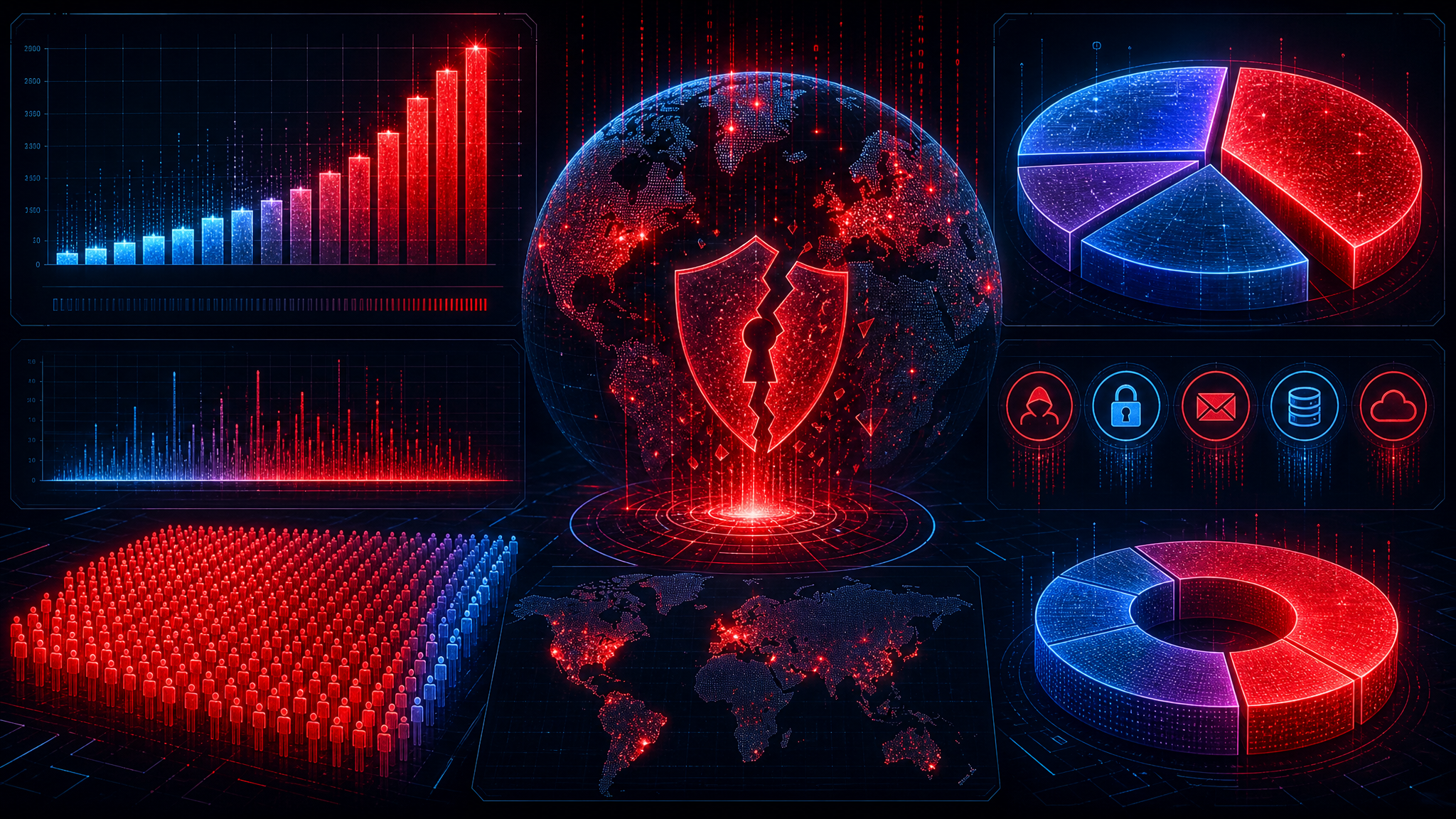
The Verizon 2025 Data Breach Investigations Report (DBIR), which analyzed over 22,000 security incidents, highlights several critical trends that defined the first half of 2026. These trends indicate a shift toward more persistent and damaging attacks that exploit human error and systemic vulnerabilities:
- Ransomware Resurgence: Ransomware attacks rose by 37% and were present in 44% of all confirmed breaches. Attackers are now double-extorting, stealing data before encrypting systems to maximize pressure on victims.
- Supply Chain Vulnerabilities: Third-party involvement doubled to 30% of confirmed breaches, proving that your security is only as strong as your weakest vendor. Integrated APIs are becoming primary attack vectors.
- Credential Theft: Stolen login information remains the leading attack vector, accounting for 22% of all incidents. Automation makes testing billions of passwords trivial for modern botnets.
- State Espionage: Espionage-related breaches surged by 163%, now accounting for 17% of all major incidents. Geopolitical tensions are directly fueling cyber aggression against civilian infrastructure.
Furthermore, the IBM Cost of a Data Breach Report 2025 found that the average cost of a data breach in the US hit $10.22 million, the highest of any country globally. While AI-powered defenses helped reduce the global average breach lifecycle by 80 days, the financial and reputational damage in 2026 has been unprecedented. Organizations are struggling to keep pace with the velocity of modern exploits.
What Are the 10 Biggest Data Breaches of 2026?
The following timeline details the most significant security failures of the year. These incidents range from massive credential dumps to targeted geopolitical attacks. Each entry highlights the vulnerability exploited and the scale of the damage, providing a clear picture of where risks currently lie.
1. Instructure Canvas LMS — 275 Million Students and Educators Exposed
The largest educational data breach in history struck Canvas in May 2026. The cybercriminal extortion collective known as ShinyHunters exploited a stored cross-site scripting (XSS) vulnerability in Canvas’s free teacher accounts. This allowed them to escalate privileges to administrative levels, exfiltrating 3.65 terabytes of data from approximately 275 million users across 8,809 institutions worldwide.
Schools, universities, and government education ministries in dozens of countries were affected. The exposed data included names, email addresses, student ID numbers, and private messages. Instructure confirmed the breach on May 1, 2026, and subsequently paid a reported $10 million ransom to prevent the publication of the stolen data.
Why it matters: A low-privilege vulnerability cascaded into a platform-wide administrative takeover. If your institution uses Canvas, verify that your credentials have been rotated immediately.
2. The 24 Billion Credential Database
In June 2026, security researchers discovered a publicly accessible Elasticsearch database containing 24 billion stolen credential records. Totaling more than 8.3 terabytes, this dataset included usernames, email addresses, plaintext passwords, and login URLs compiled from years of prior breaches. This database serves as a massive weapon for automated credential stuffing attacks.
Why it matters: This is not a single-company breach but a compilation tool. If you reuse passwords, this database likely contains working credentials for your accounts.
3. KDDI and Six Japanese ISPs — 14.2 Million Email Accounts Leaked
Japan’s KDDI Corporation disclosed that a vulnerability in third-party email system software exposed up to 14.22 million email addresses and passwords across six major internet service providers. A shared infrastructure flaw meant a single point of compromise cascaded across the entire ISP ecosystem.
Why it matters: ISP-level breaches are particularly damaging because the compromised email is often the primary account used for password resets on all other services.
4. Klue Supply Chain Attack — 200 Companies Hit
On June 12, 2026, the hacking group Icarus breached market research platform Klue using a legacy API credential issued in 2022 that was never decommissioned. That single forgotten key gave attackers access to OAuth tokens connecting Klue to hundreds of customers’ Salesforce environments. Close to 200 companies had data stolen, including major cybersecurity firms like LastPass, HackerOne, and Snyk.
Why it matters: Even security-first organizations are only as safe as their least-secured vendor. This incident underscores the critical risk of third-party integrations.
5. Illinois and Minnesota Departments of Human Services
A misconfigured government system exposed approximately 1 million individuals’ records in January 2026. Stolen data included names, addresses, dates of birth, phone numbers, the first four digits of Social Security numbers, and Medicaid IDs.
Why it matters: Partial SSN exposure combined with Medicaid IDs is sufficient to commit medical identity fraud, which can take years to detect and correct.
6 & 7. DPRK Crypto Heists — $577 Million Stolen
North Korea’s Lazarus Group executed two precision attacks in April 2026 that accounted for 76% of all cryptocurrency stolen globally for the year. The first attack drained $285 million from Drift Protocol, and seventeen days later, the group extracted $292 million from the KelpDAO bridge.
Why it matters: These state-sponsored operations utilize operational security that exceeds most enterprise defenses, highlighting the structural vulnerabilities in decentralized finance protocols.
8. Stryker — Iran-Linked Hackers Wipe Devices
In March 2026, Handala, a hacking group with ties to Iranian intelligence, attacked medical device giant Stryker. The attackers remotely wiped tens of thousands of employee devices, disrupting manufacturing and shipments as retaliation for geopolitical events.
Why it matters: Geopolitical conflict now directly targets civilian corporate infrastructure, making medical supply chains soft targets for high-disruption attacks.
9. FBI Surveillance System Compromise
In April 2026, the FBI declared a “major cyber incident” after Chinese intelligence operatives compromised one of its surveillance systems. The breach targeted national security infrastructure and follows the Salt Typhoon campaign.
Why it matters: When the agency responsible for investigating cybercrime suffers a confirmed major breach, it marks a severe escalation in state-sponsored cyber warfare.
10. Match Group (Tinder, Hinge, OkCupid)
ShinyHunters claimed responsibility for breaching Match Group in January 2026. While Match Group did not disclose an exact record count, researchers estimate tens of millions of user profiles were exfiltrated, including location history and private messages.
Why it matters: Dating app data is highly sensitive. Users should rotate passwords and review privacy settings immediately.
How Can You Protect Yourself After a Data Breach?
If your data appeared in any of the 2026 breaches listed above, the window to act is short. Follow this priority order to secure your digital identity and minimize potential financial damage. Proactive measures are now more critical than reactive ones.

- Find out if you were affected: Check HaveIBeenPwned against every email you use. The 24-billion credential database makes this check more urgent than ever.
- Reset passwords immediately: Use a password manager to generate unique, random passwords for every service. Any account sharing a compromised password is effectively compromised.
- Enable Two-Factor Authentication (2FA): Credential theft is the leading attack vector. 2FA blocks most credential-stuffing attacks even when your password is known. Use an authenticator app rather than SMS where possible.
- Monitor your credit and identity: Breaches involving SSN fragments or financial data create windows for identity theft. NerdWallet’s free credit monitoring allows you to track your credit score and receive alerts when new accounts are opened in your name.
- Place a credit freeze: If your SSN was exposed, place a free credit freeze at all three major bureaus (Equifax, Experian, TransUnion). This prevents new credit from being opened in your name and is the strongest protection available.
- Stay informed: The Canvas, KDDI, and Klue breaches are under active investigation. Track coverage through NewsGalaxy’s cybersecurity news for real-time updates.
- Practice Email Hygiene: Consider using alias emails for non-critical services. This limits the damage if a specific vendor is breached and helps identify the source of spam.
- Enable Dark Web Monitoring: Many identity protection services now offer dark web scanning. This alerts you if your specific data combinations appear in underground forums.
Frequently Asked Questions About 2026 Data Breaches
The Instructure Canvas breach is the largest confirmed breach of 2026. It exposed approximately 275 million records across 8,809 educational institutions worldwide after ShinyHunters exploited a stored XSS vulnerability.
Across the ten largest incidents alone, well over 300 million individual records were compromised through July 2026. Healthcare breaches reported to the US Department of Health and Human Services affected more than 19 million individuals in the first half of the year.

Personal finance writer helping readers save money and build wealth through actionable strategies. Covers budgeting, investing, frugal living, and financial independence topics.
Get the newsgalaxy digest
Honest reviews and no-hype guides — straight to your inbox. No spam, unsubscribe anytime.
Some links in our articles are affiliate links. See our full Affiliate Disclosure for details.