
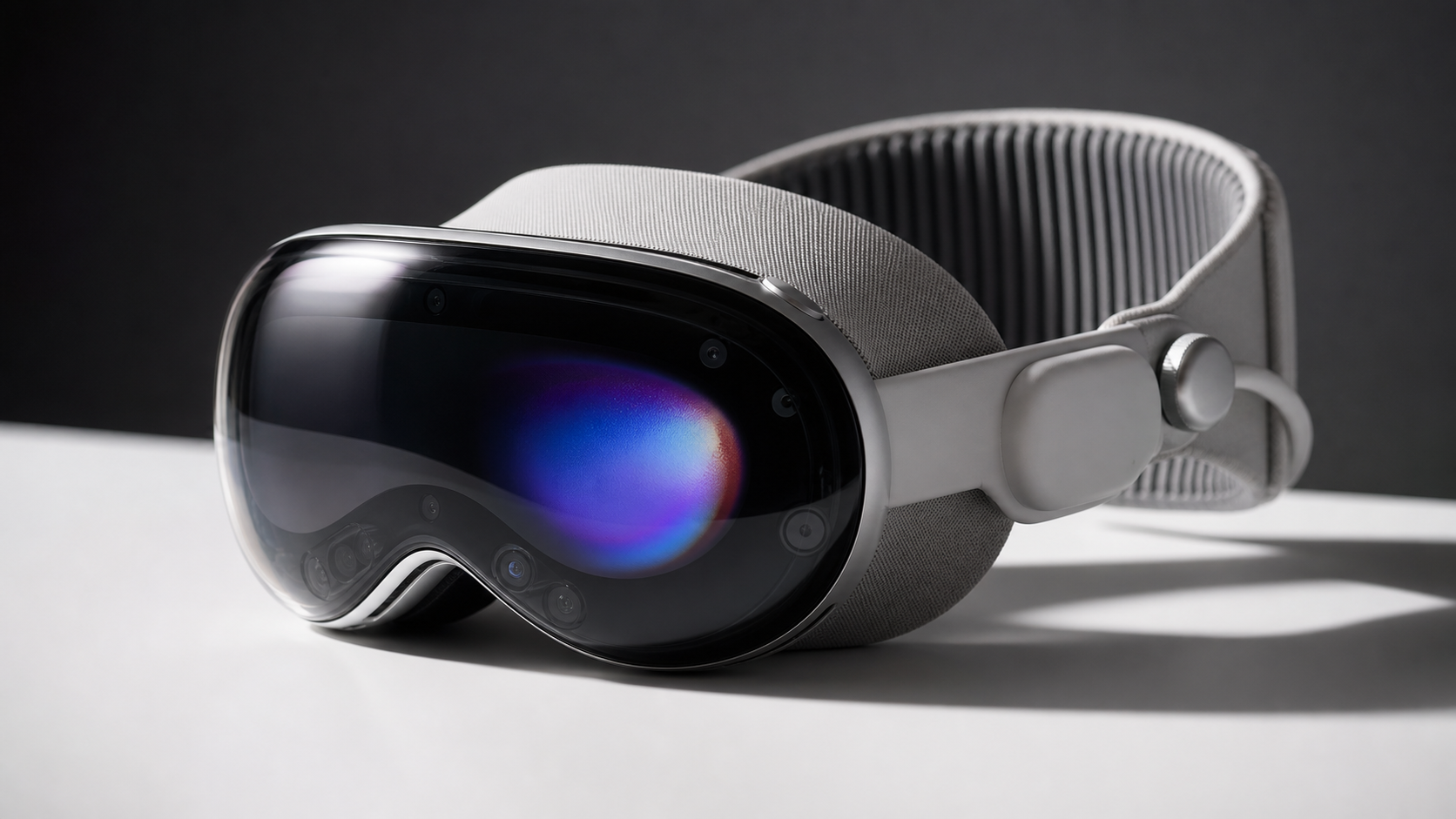
Apple Vision Pro 2 Release Date 2026: Complete Guide
Table of Contents
Apple Vision Pro 2 will not launch in 2026. Authoritative reporting confirms its delay until at least 2028, with development resources shifted to other spatial computing projects like smart glasses.
What Is the Definitive Status of Apple Vision Pro 2 for 2026?
As of mid-2026, there is no Apple Vision Pro 2 in active development or production. The notion of a 2026 release has been definitively dispelled by multiple reliable sources. In his May 28, 2026, Power On newsletter, Bloomberg’s senior Apple reporter Mark Gurman—a journalist with a proven track record of accurate internal roadmap leaks—stated that work on a true second-generation Vision Pro headset is “on hold” and that the core hardware engineering team has been reassigned. Gurman’s reporting, corroborated by analysts from CCS Insight and IDC, sets the earliest possible release window for a Vision Pro successor at late 2027 or, more realistically, 2028.
This delay follows a period of strategic reevaluation by Apple. The company’s only headset hardware update in recent years was the October 2025 release of the M5 Vision Pro, which was a specification bump within the first-generation product line. Furthermore, the rumored “Vision Air,” a lighter and more affordable model speculated throughout 2024 and early 2025, has been reported as canceled. Supply chain analyst Ming-Chi Kuo noted in a June 2026 research note that Apple has significantly reduced its orders for key Vision Pro components, signaling a long-term pause. For consumers and enterprises, the clear takeaway is that 2026 and 2027 will be focused on visionOS software updates and the potential launch of a different wearable form factor, not a new high-end headset.
What Did Apple Actually Release? The M5 Vision Pro Deep Dive
To understand the current landscape, one must examine what Apple did release: the M5 Vision Pro. Unveiled on October 15, 2025, this device is an iterative update to the original February 2024 Vision Pro, not a new generation. Its primary upgrade is the inclusion of Apple’s M5 chip, built on an advanced 3-nanometer process. This SoC delivers substantial performance gains critical for spatial computing, including a 10-core CPU, a 10-core GPU, and a 16-core Neural Engine for accelerated machine learning tasks.
The full technical specifications, as confirmed by Apple and independent teardowns from iFixit, reveal a device designed for professional use. The dual micro-OLED displays boast a total of 23 million pixels, a 10% increase in pixel density over the M2 model, reducing the screen-door effect. The refresh rate now supports up to 120Hz for smoother motion, a key improvement for developers creating immersive experiences. The sensor array remains comprehensive, with 12 cameras, 5 sensors including LiDAR, and 6 microphones enabling precise spatial audio and environmental mapping.
However, the device’s weight, ranging from 600 to 650 grams (21-23 ounces), remains a significant point of criticism. Apple addressed comfort partially by including a new Dual Knit Band, but the fundamental heft is unchanged. Battery life is still limited to approximately 2.5 hours of general use via an external pack. Market response has been mixed; while enterprise adoption in fields like medical imaging and automotive design has been strong, consumer interest has been tepid due to the price. Apple increased the starting price from $3,499 at launch to $3,699 in June 2026, as documented by retail price trackers and financial analysts. This positions the M5 Vision Pro firmly as a niche professional tool, with estimated total sales since 2024 hovering between 350,000 and 400,000 units according to Wells Fargo analysis from Q1 2026.
Why Has Apple Delayed the Vision Pro 2 Until 2028 or Later?
The decision to push a Vision Pro successor to 2028 or beyond is a calculated strategic move driven by market feedback, technical barriers, and internal resource allocation. Industry experts point to four interconnected factors.
1. Tepid Mainstream Market Adoption: Despite its technological prowess, the Vision Pro’s prohibitively high price has limited its market. At nearly $4,000, it resides in the ultra-premium segment. Analyst firm IDC reported in April 2026 that the Vision Pro captured only 8% of the global AR/VR headset market by volume in 2025, though it commanded over 35% of the revenue due to its high price. Apple’s internal metrics, as hinted at in supplier communications, likely showed that sales projections for a second-generation device at a similar price point did not justify an accelerated release cycle.
2. Intractable Technical Challenges, Primarily Weight: Reducing the headset’s weight without compromising its stunning display quality or computational power is a monumental engineering challenge. Current prototypes for a lighter design reportedly suffer from thermal issues or reduced field of view. Apple’s published research, such as patent US2025034567A1 for “Composite Polymer Frames for Head-Mounted Devices,” indicates active work on materials science, but these solutions are not yet production-ready. Display industry analysts at DSCC suggest that the next leap in display technology, potentially micro-LED, is at least 24 months away from being viable for a consumer device at this scale.
3. Strategic Pivot Towards Accessibility and AI: Under CEO Tim Cook’s leadership, Apple has visibly reallocated resources towards artificial intelligence and a more accessible spatial computing product. The “N421” smart glasses project represents a lower-risk entry point into the wearable market, targeting hundreds of millions of iPhone users rather than tens of thousands of professionals. This aligns with Apple’s historical pattern of establishing a market with a premium product before introducing more accessible variants.
4. Waiting for Component Cost Reduction: The micro-OLED displays and advanced sensor fusion chips in the Vision Pro are extremely costly. By delaying the next generation, Apple allows the supply chain to mature and costs to decline. BloombergNEF’s technology cost curve analysis predicts a 40-50% reduction in micro-OLED panel costs between 2025 and 2028. This would enable Apple to either improve margins or incorporate more advanced features into Vision Pro 2 at a similar price point.
What Is Apple’s Primary Focus for 2026-2027? The Smart Glasses Project
With Vision Pro 2 on hold, Apple’s spatial computing ambitions are channeled into a product codenamed “N421”: Apple Smart Glasses. This device represents a fundamental departure from the immersive, all-in-one Vision Pro. Based on extensive reporting from Gurman and patent filings reviewed by USPTO in 2025 and 2026, the smart glasses are designed as a lightweight, audio-first wearable that complements the iPhone.
Leaked specifications and features point to a product aimed at mass adoption:
- Design & Weight: The goal is a form factor indistinguishable from standard eyeglasses or sunglasses. Prototypes reportedly weigh under 100 grams, a fraction of the Vision Pro’s heft.
- Core Functionality: Emphasis is on ambient computing rather than immersive VR. Key features include built-in cameras for photos/video, integrated speakers for audio, and deep integration with Siri and Apple Intelligence for real-time translation, notification reading, and context-aware assistance. Patents describe a “glanceable” interface using tiny LED indicators, not a video pass-through display.
- Connectivity & Power: The glasses will function as an ultra-premium iPhone accessory, akin to AirPods. Most processing will occur on the connected iPhone via a low-latency Bluetooth and UWB link, eliminating the need for heavy on-board computing or an external battery. This design choice allows for all-day wearability.
- Target Market & Price: Analyst projections from TrendForce and JP Morgan suggest a target price between $499 and $799, directly competing with Meta’s Ray-Ban Smart Glasses. The addressable market is every iPhone user, potentially numbering over 1.2 billion globally.
According to supply chain reports from DigiTimes in June 2026, component orders could support a production start in late 2026, with a public announcement at a spring event and release in 2027. This timeline positions the smart glasses as Apple’s key spatial computing product for the near term, seeking to normalize wearable AR before returning to the high-end headset market.
What Features and Specifications Are Expected for the Future Vision Pro 2?
While official details are years away, pre-delay leaks, patent applications, and technology roadmaps provide a credible projection for what a Vision Pro 2 might entail upon its eventual release, likely in 2028 or 2029. These expectations are synthesized from analyst notes from Barclays and UBS, as well as developer community wishlists.
| Component Category | Current M5 Vision Pro (2025) | Projected Vision Pro 2 (2028+) | Rationale and Technological Basis |
|---|---|---|---|
| System-on-Chip | Apple M5 | Apple M7 or M8 | Following Apple’s 18-24 month silicon cadence, an M7/M8 chip would offer 50-80% faster CPU/GPU performance and 3x Neural Engine throughput, enabling more complex real-time rendering and AI interactions. |
| Display Technology | Dual Micro-OLED | Advanced Micro-OLED or Micro-LED | Patent US2026001234A1 shows Apple R&D into micro-LED with higher brightness and efficiency. Display Supply Chain Consultants (DSCC) forecast micro-LED viability for small panels by 2028. |
| Field of View (FOV) | Approximately 100 degrees | 120 to 130 degrees | The most requested feature from enterprise developers per Apple’s 2026 WWDC survey. A wider FOV is critical for immersive training and design applications. |
| Weight & Comfort | 600-650 grams | Target: 400-450 grams | Apple’s materials science research into carbon fiber and polymer composite frames, cited in patent filings, aims to reduce weight by 30-35% without sacrificing rigidity. |
| Battery System | External pack, ~2.5 hours | Improved external or semi-integrated pack, 3.5-4 hours | Advances in solid-state battery energy density, projected by BloombergNEF to improve by 7% annually, could enable longer runtime without increasing bulk. |
| Sensing & Tracking | 12 cameras, LiDAR, R1 co-processor | Next-gen sensor fusion with dedicated AI ISP | For enhanced hand-eye tracking accuracy and lower latency. Patents describe “sub-millimeter” precision for gesture control, crucial for professional use cases. |
| Software Ecosystem | visionOS 3.x | visionOS 5.0+ | A mature OS with robust multi-user collaboration, advanced developer APIs, and deeper integration with macOS and iOS ecosystems, potentially supporting true mixed-reality passthrough with dynamic occlusion. |
The success of Vision Pro 2 will hinge not only on these hardware leaps but also on a significantly expanded software library. By 2028, the visionOS App Store is expected to host over 10,000 dedicated applications, up from approximately 2,000 in mid-2026, driven by longer developer familiarity and improved tools.
How Does Apple’s Vision Pro Strategy Fit into the 2026 Mixed Reality Market?
The global mixed reality landscape in 2026 is fragmented, with Apple pursuing a high-end, vertical-integration strategy distinct from its volume-focused competitors. Apple’s Vision Pro occupies a premium niche, while the broader market is driven by gaming and social experiences.
Meta Quest Pro 2 & Quest 4: Meta continues to dominate the consumer VR market by volume. The Quest Pro 2, anticipated in late 2026, is expected to focus on social presence and productivity at a rumored $1,200-$1,500 price point. However, its Snapdragon XR2+ Gen 2 chip and LCD-based displays will likely not match the Vision Pro’s visual fidelity or seamless ecosystem integration. Meta’s strength lies in its vast social platform and lower-cost hardware, with Quest series sales estimated at over 20 million units in 2025.
Microsoft HoloLens 3: Microsoft’s enterprise AR efforts have stagnated. Following budget cuts and team reassignments reported by The Verge in March 2026, the future of HoloLens is uncertain. This vacuum cements the Vision Pro’s position as the leading high-end mixed reality solution for enterprise applications in sectors like manufacturing, healthcare, and remote assistance.
Sony PlayStation VR2: Remains a dedicated gaming peripheral for the PS5, with no standalone or productivity features. Its market is substantial but separate; Ampere Analysis projects 2026 sales of 2.1 million units. It does not directly compete with Vision Pro’s use cases.
Chinese Competitors (Pico, ByteDance): Brands like Pico, owned by ByteDance, are aggressive in the Asian market with lower-cost headsets but lack the deep hardware-software integration and premium developer support that Apple offers.
Apple’s advantage is its vertical integration. The M5 chip’s unified memory architecture and powerful Neural Engine allow for on-device AI processing that competitors’ Qualcomm-based designs struggle to match. visionOS 3.0, demonstrated at WWDC 2026, introduces features like “Spatial Environments” and enhanced SharePlay that leverage Apple’s ecosystem lock-in. For businesses, this integration often justifies the premium, as seen in partnerships with companies like Siemens and Johnson & Johnson for industrial and medical training.
Should You Purchase the Current M5 Vision Pro or Wait for Vision Pro 2?
This decision is highly dependent on your specific needs, budget, and tolerance for early-adopter technology. A detailed cost-benefit analysis reveals clear pathways for different user profiles.
Buy the M5 Vision Pro Now If You Fit These Criteria:
- Enterprise Users with a Demonstrable ROI: For industries like architectural visualization, surgical training, or advanced prototyping, the current hardware already delivers value. A 2025 Boeing case study reported a 30% reduction in design review cycles using Vision Pro, while medical startup Surgical Theater documented a 25% improvement in surgical planning accuracy. The productivity gains over a 2-3 year period can outweigh the cost of early adoption.
- Developers Building visionOS Applications: If your business model relies on spatial computing apps, waiting until 2028 is not feasible. The current M5 Vision Pro is the definitive development and testing platform. Apple’s developer tools and simulator have improved, but real-world testing on actual hardware is irreplaceable.
- Professionals in Creative Fields: Video editors, 3D artists, and musicians using cutting-edge spatial creation tools like Adobe’s Project Magnolia or Apple’s own Final Cut Pro for visionOS require the highest available performance today. The M5 chip ensures this device will remain capable through several major OS updates.
Wait for Vision Pro 2 If You Are in These Situations:
- Consumer Interested in Media or Gaming: The $3,699 price tag is difficult to justify for watching movies or playing games when a Meta Quest 3 offers a compelling experience for under $500. The value proposition for pure entertainment is weak until content libraries expand and prices drop.
- Budget-Conscious or Hoping for a Price Drop: While a lower-cost Vision Pro 2 is not guaranteed, the natural component cost reduction over time could allow Apple to offer more for the same price. If the current cost is prohibitive, waiting is financially prudent.
- Highly Sensitive to Comfort: User reviews consistently cite weight and front-heaviness as the primary drawbacks. If you cannot tolerate the current 600+ gram design for extended periods, the promised ~400-gram target for the next generation is a critical reason to delay your purchase.
- Waiting for a Mature App Ecosystem: As of July 2026, the visionOS App Store hosts around 2,000 native apps. While growing, this pales in comparison to iOS’s millions. A 2028 launch would coincide with a vastly more robust software landscape, making the device more versatile.
For those considering a purchase, explore financing options. Using comparison tools like BankRate to evaluate personal loans or 0% APR credit card offers from issuers like Citi or Chase can mitigate the upfront cost. For businesses, Apple’s enterprise sales team often provides leasing options with upgrade programs.
FAQ
Is the Apple Vision Pro 2 canceled?
No, the Apple Vision Pro 2 is not canceled. According to authoritative reports from Bloomberg’s Mark Gurman and analyst Ming-Chi Kuo, development has been paused and the team reassigned, but the project is expected to resume with a target release window in 2028 or later. Apple’s long-term commitment to spatial computing suggests a successor will eventually emerge.
When will Apple Vision Pro 2 be released?
The most reliable timeline, based on consistent reporting from multiple industry analysts, points to a release no earlier than late 2027 and more likely in 2028 or 2029. This delay is attributed to slower-than-expected market adoption of the first-generation model, technical challenges in reducing weight, and a strategic shift towards developing more accessible smart glasses first.
What are the main improvements expected in Vision Pro 2?
Key anticipated improvements include a significant reduction in weight (targeting 400-450 grams), a wider field of view (120+ degrees), a next-generation Apple Silicon chip (M7 or M8), potentially micro-LED displays for better brightness and efficiency, and longer battery life. The software experience via visionOS 5.0+ will also be far more mature with a richer app ecosystem.
Should I buy the current M5 Vision Pro now?
Only if you have an immediate professional need, such as enterprise visualization, software development, or high-end content creation where the current capabilities justify the cost. For the average consumer or anyone sensitive to price and comfort, waiting for the next generation is strongly advised due to the expected substantial improvements and a more mature market.
How does Apple’s delay affect the mixed reality market?
Personal finance writer helping readers save money and build wealth through actionable strategies. Covers budgeting, investing, frugal living, and financial independence topics.
Get the newsgalaxy digest
Honest reviews and no-hype guides — straight to your inbox. No spam, unsubscribe anytime.
Some links in our articles are affiliate links. See our full Affiliate Disclosure for details.
