Artificial Intelligence Breakthroughs 2025: The Biggest AI News Shaping Our World
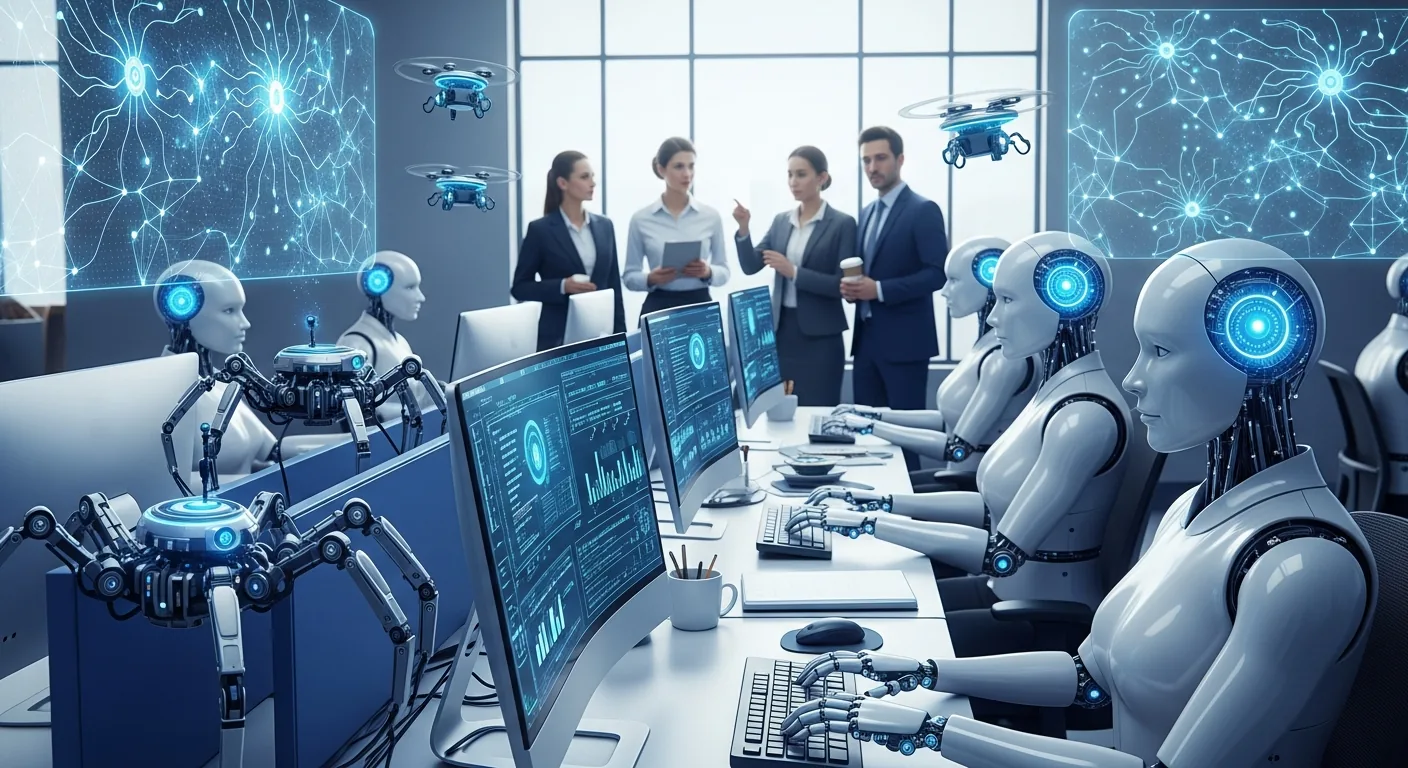
Artificial intelligence in 2025 reached an inflection point unlike any before it: according to McKinsey’s 2025 Global AI Report, over 72% of organizations worldwide have now deployed at least one AI use case — up from 55% in 2023. From reasoning models that can solve PhD-level math problems to AI agents that autonomously execute multi-step business tasks, the breakthroughs of 2025 have permanently altered the technological landscape.
Table of Contents
- 1. The Rise of Reasoning Models
- 2. Agentic AI Goes Mainstream
- 3. Multimodal AI Matures
- 4. Open-Source AI Catches Up
- 5. AI Regulation Takes Shape
- 6. AI in Healthcare: Life-Saving Milestones
- 7. Industry Impact by the Numbers
- Frequently Asked Questions
1. The Rise of Reasoning Models
If 2024 was the year of large language models, 2025 was the year AI learned to think. Reasoning models — AI systems trained to engage in extended chain-of-thought processing before producing answers — emerged as the dominant paradigm shift of the year.
OpenAI’s o3 series, released in early 2025, achieved unprecedented scores on the ARC-AGI benchmark, solving abstract reasoning tasks that previously stumped all AI systems. Meanwhile, Google DeepMind’s Gemini Ultra 2 demonstrated the ability to work through complex scientific problems across chemistry, biology, and physics at expert level.
What makes this breakthrough significant is not just benchmark performance. Reasoning models began showing genuine utility in enterprise environments. Law firms deployed them for contract analysis, pharmaceutical companies used them for drug discovery pipelines, and financial institutions adopted them for risk modeling. According to a Stanford AI Index 2025 report, reasoning model deployments in professional services grew by 340% year-over-year.
The architectural innovation underpinning reasoning models — extended inference time compute — proved to be a powerful lever. Rather than simply scaling training data, AI labs discovered that allowing models more “thinking time” per query dramatically improved output quality. This insight is now shaping the entire direction of AI research heading into 2026.
For a deeper look at how AI is reshaping industries, explore our latest technology coverage on NewsGalaxy.
2. Agentic AI Goes Mainstream
Perhaps the most consequential development of 2025 was the maturation of agentic AI — systems capable of autonomously planning, using tools, and executing multi-step tasks without constant human intervention.
Anthropic’s Claude, OpenAI’s Operator, and Google’s Project Mariner all launched agentic interfaces that allow AI to interact with web browsers, run code, manage files, and complete complex workflows. What started as impressive demos quickly became operational business tools.
Salesforce reported that businesses using AI agents saw an average 45% reduction in time spent on routine administrative tasks. Customer service departments were early adopters: AI agents could now handle entire support ticket lifecycles — retrieving account information, troubleshooting, processing refunds, and updating records — without any human handoff for the majority of cases.
The developer ecosystem exploded around agentic frameworks. LangChain, CrewAI, and AutoGen saw combined downloads exceeding 50 million per month by Q3 2025, as developers worldwide built custom agents for everything from marketing automation to scientific literature review.
However, agentic AI also raised new concerns. Questions about AI systems making consequential decisions autonomously — spending money, sending communications, modifying systems — sparked intense debate among AI safety researchers and policymakers alike.
3. Multimodal AI Matures
2025 marked the year multimodal AI moved from novelty to workhorse. The ability to seamlessly process and generate text, images, audio, video, and code in a single model became table stakes for frontier AI systems.
Google’s Gemini 2.0 Ultra demonstrated real-time multimodal reasoning — a doctor could hold up a patient’s X-ray, ask a question verbally, and receive a detailed analysis referencing both the image and spoken context. Adobe integrated multimodal AI deeply into its Creative Suite, allowing designers to describe modifications in natural language while the AI simultaneously analyzed reference images and applied changes.
Video generation reached a new threshold. Sora’s successors (from OpenAI) and competing systems from Runway, Kling, and Veo 2 (Google) produced cinematically coherent video up to several minutes long with physically plausible motion. Hollywood studios began using these tools for pre-visualization and concept development, and independent creators used them to produce short films at a fraction of traditional costs.
According to Gartner’s 2025 Emerging Technology Hype Cycle, multimodal AI has exited the “Peak of Inflated Expectations” and entered the “Slope of Enlightenment,” signaling broad, practical adoption across industries rather than just experimental deployments.
Read more about the latest technology news and analysis at NewsGalaxy.
4. Open-Source AI Catches Up
One of the most democratizing stories of 2025 was the rapid advancement of open-source AI models, which significantly narrowed the gap with proprietary frontier systems.
Meta’s Llama 4 series, released in mid-2025, delivered performance rivaling GPT-4-class models while remaining fully open-weight and freely available. This release catalyzed a wave of innovation: thousands of fine-tuned variants emerged within weeks, tailored for medicine, law, education, and dozens of specialized domains.
Mistral AI continued its trajectory as the premier European AI lab, releasing models optimized for enterprise deployment with strong multilingual capabilities — crucial for global businesses operating across language barriers.
The open-source movement had profound geopolitical implications. Countries without access to top-tier proprietary APIs could now build sovereign AI capabilities on open foundations. India, Brazil, and several EU member states launched national AI programs explicitly built on open-weight models, reducing dependency on US and Chinese AI providers.
The competitive pressure from open-source also forced proprietary providers to innovate faster and price more competitively. OpenAI, Anthropic, and Google all reduced API pricing significantly in 2025, making AI capabilities accessible to a far broader range of businesses and developers.
5. AI Regulation Takes Shape
2025 was the year AI regulation moved from proposal to implementation. The EU AI Act — the world’s first comprehensive AI regulation framework — began its enforcement phase, requiring organizations to classify AI systems by risk level and implement corresponding compliance measures.
The United States took a different approach, with the Biden-Harris administration’s executive order framework evolving under new leadership into a more industry-friendly regime focused on voluntary commitments and sector-specific guidelines. The result was a complex patchwork of state-level regulations, with California, New York, and Texas each implementing distinct requirements for AI transparency and accountability.
China consolidated its AI governance framework, requiring algorithmic recommendation systems and generative AI products to register with regulators and undergo security assessments. This created compliance challenges for global companies operating in the Chinese market.
Internationally, the UK’s AI Safety Institute emerged as a respected global forum for AI risk assessment, collaborating with equivalents in the US, EU, Japan, and South Korea to develop shared evaluation methodologies. The G7 nations agreed on a set of AI governance principles — though critics noted these remained aspirational rather than binding.
6. AI in Healthcare: Life-Saving Milestones
Healthcare emerged as the sector where AI breakthroughs translated most directly into human benefit in 2025. Several milestones stand out.
Google DeepMind’s AlphaFold 3, building on its revolutionary predecessor, expanded protein structure prediction to include DNA, RNA, and small molecules — dramatically accelerating drug discovery. Multiple pharmaceutical companies reported that AI-assisted drug candidate identification reduced early-stage research timelines from years to months.
AI diagnostic tools received regulatory clearance across multiple jurisdictions for detecting cancers, cardiovascular disease, and diabetic retinopathy from medical imaging. A landmark study published in The Lancet found that AI-assisted mammography screening achieved 9.6% higher cancer detection rates while reducing radiologist workload by 44%.
Mental health saw significant AI investment. Conversational AI companions and AI-assisted therapy tools proliferated, though this space remains ethically complex. The FDA issued new guidance specifically for AI mental health applications, requiring clinical evidence of safety and efficacy rather than treating them as general wellness apps.
Personalized medicine took a leap forward as AI systems became capable of analyzing patients’ genomic data, medical history, and lifestyle factors simultaneously to recommend tailored treatment protocols. According to the WHO’s 2025 Digital Health Report, AI-assisted diagnosis is now standard practice in over 40 countries.
7. Industry Impact by the Numbers
The economic footprint of AI in 2025 was staggering. According to PwC’s 2025 Global AI Impact Study, AI is on track to contribute $15.7 trillion to the global economy by 2030, with 2025 representing the year when measurable productivity gains first became visible at the macroeconomic level.
Job transformation — not elimination — was the dominant labor market story. The World Economic Forum’s Future of Jobs Report 2025 found that while AI displaced approximately 12 million jobs globally, it created 18 million new roles, with the net positive being concentrated in AI oversight, prompt engineering, AI ethics compliance, and human-AI collaboration management.
Software development was among the most transformed professions. GitHub Copilot and its competitors reported that developers using AI coding assistants completed tasks 55% faster on average. Entire software startups were now launched by solo founders using AI to handle coding, design, customer service, and marketing — a structural change in the startup ecosystem.
The semiconductor industry boomed to support AI demand. NVIDIA’s data center revenues exceeded $100 billion annually for the first time, while competitors from AMD, Intel, and a wave of AI chip startups (Groq, Cerebras, Etched) competed for a rapidly expanding market. Explore more in-depth industry analysis and breaking news at NewsGalaxy.
Frequently Asked Questions
Q: What were the most important AI breakthroughs in 2025?
A: The most significant AI breakthroughs of 2025 include the rise of reasoning models (like OpenAI’s o3 series) that can solve complex problems step-by-step, the mainstream adoption of agentic AI systems that can autonomously complete multi-step tasks, major advances in multimodal AI (handling text, images, audio, and video together), the rapid maturation of open-source AI (Meta’s Llama 4 closing the gap with proprietary models), and landmark AI applications in healthcare including drug discovery and cancer detection.
Q: How did AI news in March 2025 differ from previous years?
A: March 2025 stood out because AI moved from impressive demonstrations to measurable business outcomes. Multiple major AI companies released agentic products that could autonomously execute real-world tasks, reasoning models surpassed human-level performance on several professional benchmarks, and the EU AI Act began enforcement — marking the first major AI regulatory implementation globally. The conversation shifted from “what can AI do?” to “how do we responsibly deploy AI at scale?”
Q: Will AI replace jobs in 2025 and beyond?
A: According to the World Economic Forum’s 2025 Future of Jobs Report, AI is transforming rather than simply eliminating jobs. While approximately 12 million jobs were displaced, 18 million new roles were created. The most at-risk roles are repetitive, rule-based tasks, while roles requiring creativity, complex judgment, emotional intelligence, and AI oversight are growing. Workers who learn to collaborate effectively with AI tools are significantly outperforming those who resist adoption.
Q: What is agentic AI and why does it matter?
A: Agentic AI refers to AI systems that can autonomously plan and execute multi-step tasks using tools — browsing the web, writing and running code, sending emails, managing files — without requiring human input at each step. It matters because it fundamentally changes how AI creates value: instead of just answering questions, AI agents can complete entire workflows. This makes AI 10-100x more productive for many business applications, but also raises important questions about oversight, accountability, and control.
Q: How is AI regulation evolving globally in 2025?
A: AI regulation in 2025 became a complex global patchwork. The EU AI Act entered enforcement, creating binding rules for AI systems by risk category. The US pursued sector-specific guidance with more voluntary commitments. China implemented requirements for generative AI registration and security review. The UK’s AI Safety Institute emerged as a global hub for AI risk assessment. Most experts expect this fragmented regulatory landscape to gradually converge toward shared international standards over the next 3-5 years.
Q: What is the economic impact of AI breakthroughs in 2025?
A: The economic impact is already significant and accelerating. PwC projects AI will add $15.7 trillion to the global economy by 2030, with 2025 marking the first year of visible macroeconomic productivity gains. NVIDIA’s data center revenues exceeded $100 billion as AI infrastructure investment surged. Companies deploying AI agents reported 45% reductions in administrative task time, and developers using AI coding tools completed work 55% faster. According to McKinsey, 72% of organizations have deployed at least one AI use case as of 2025.
Related Reading
- AI in 2026: The 10 Biggest Breakthroughs Changing Everything
- AI Agents 2026: Reshaping Work & Business
- AI Agents in 2026: The Biggest Trends Reshaping Work and Business

James Walker is a technology reporter with 9 years of experience covering the intersection of innovation, business, and society. He tracks emerging trends in AI, cybersecurity, and Big Tech — translating complex developments into clear, compelling stories for a broad audience.