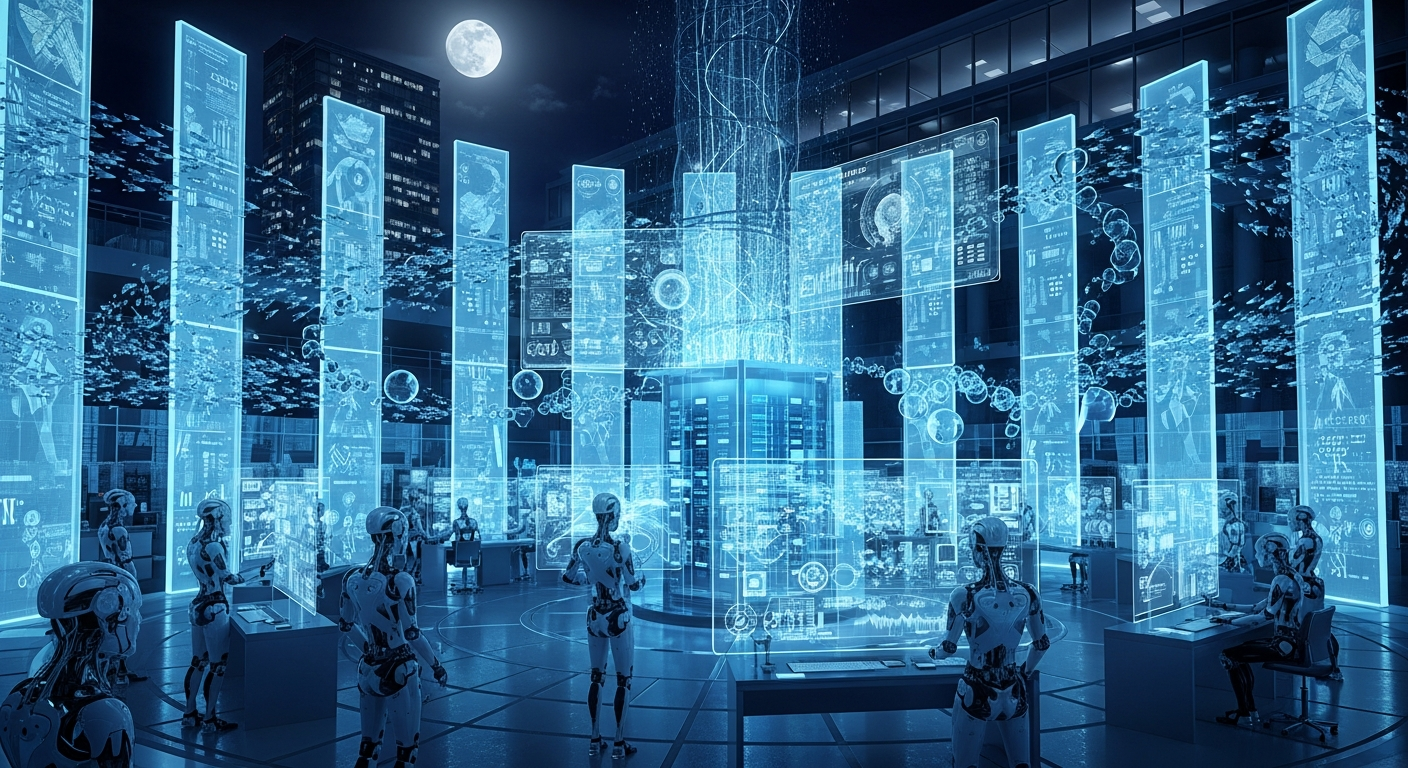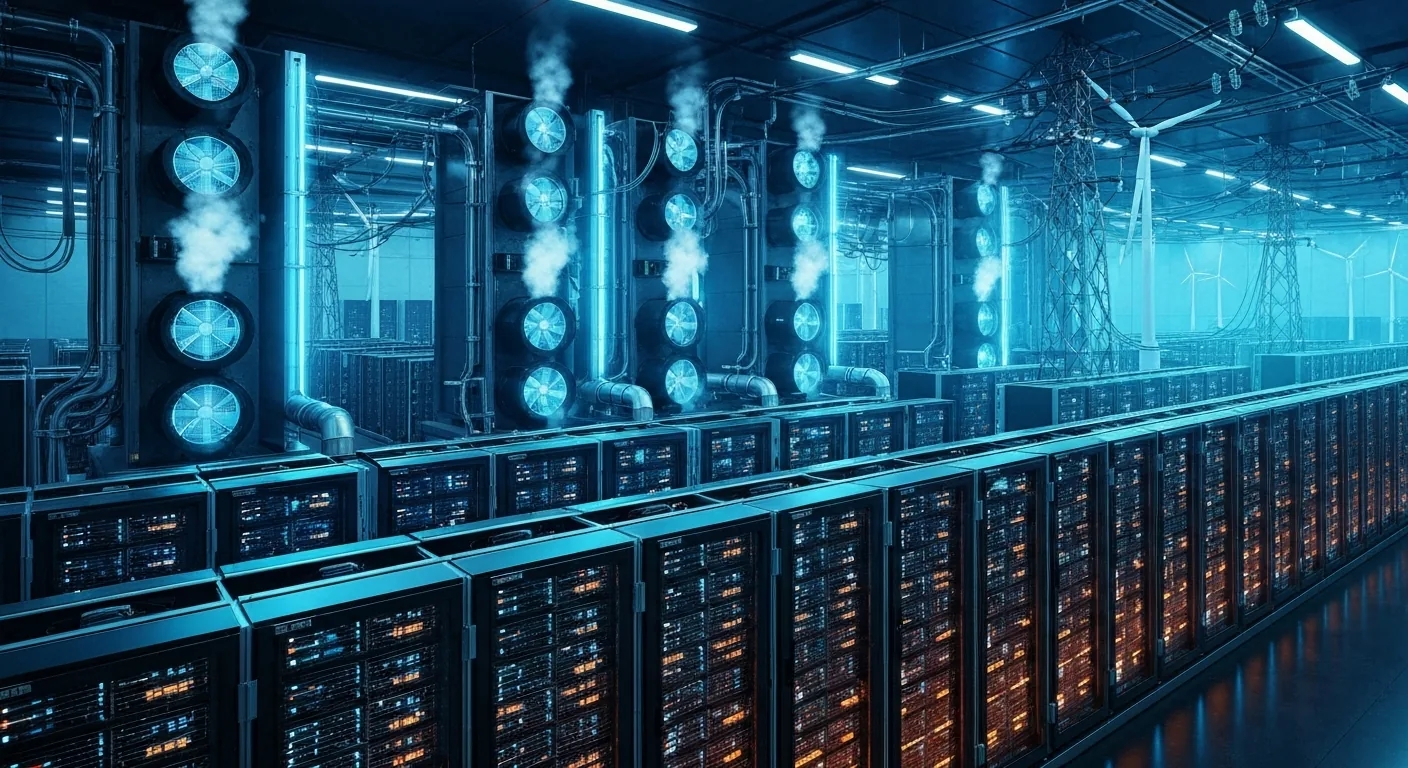
The AI data center energy crisis is no longer a future concern — it’s happening right now. In 2026, data centers worldwide are consuming over 1,000 terawatt-hours of electricity annually, roughly equivalent to Japan’s entire national power consumption. As tech giants pour hundreds of billions into AI infrastructure, the strain on power grids is pushing electricity prices up, sparking political backlash, and forcing an urgent rethink of how we power the intelligence revolution.
Quick Answer: How Bad Is the AI Data Center Energy Crisis?
AI data centers now consume approximately 90 TWh annually — a tenfold increase from 2022. A single large AI facility draws 50–100 megawatts, comparable to powering a small city. U.S. electricity prices have risen 6% through 2026 partly due to this demand surge, and data center occupancy in major markets exceeds 95%. The crisis is real, accelerating, and reshaping energy policy worldwide.
The Numbers Behind the AI Data Center Power Consumption Surge
The scale of AI’s energy appetite has caught even industry insiders off guard. According to the International Energy Agency (IEA), global data center electricity consumption is on track to surpass 1,000 TWh in 2026 — more than double the 415 TWh consumed in 2024. AI workloads are the primary driver, with AI-specific power demand reaching 90 TWh, up from roughly 9 TWh just four years ago.
In the United States alone, data centers now account for approximately 4% of total electricity consumption, with projections suggesting this could reach 6.7% to 12% by 2028. The Department of Energy estimates U.S. data center demand could hit 74 GW by 2028, against a projected shortfall of about 49 GW in available power access — a gap that no amount of incremental grid upgrades can easily close.
Ireland offers a stark warning of what concentrated data center growth looks like: the country’s data center electricity share could climb to 32% by 2026, up from 21% currently. That means nearly a third of Ireland’s power grid would serve data centers, leaving residents and businesses competing for the remainder.
Key Energy Statistics at a Glance
| Metric | 2022 | 2024 | 2026 (Projected) |
|---|---|---|---|
| Global data center electricity (TWh) | ~460 | ~415 | 1,000+ |
| AI-specific power consumption (TWh) | ~9 | ~30 | ~90 |
| U.S. data center share of electricity | ~2.5% | ~3% | ~4% |
| Single AI data center power draw | 10–30 MW | 30–50 MW | 50–100+ MW |
| Ireland data center electricity share | ~18% | ~21% | ~32% |
| U.S. electricity price increase | Baseline | +5% | +6% |
Why AI Infrastructure Energy Demand Is Growing So Fast
Three converging forces are driving AI data center power consumption to unprecedented levels in 2026.
1. The Training Arms Race
Training a single frontier AI model like GPT-5 or Gemini Ultra requires thousands of GPUs running continuously for weeks or months. Each training run can consume as much electricity as a small town uses in a year. As companies race to build ever-larger models, the energy requirements scale roughly in proportion to model size — and model sizes are still growing exponentially.
2. Inference at Scale
While training gets the headlines, inference — the process of running AI models to serve user queries — is becoming the larger energy consumer. With hundreds of millions of people now using AI assistants, image generators, and coding tools daily, the cumulative inference load has surpassed training in total energy consumption. A single ChatGPT query uses roughly 10 times more electricity than a Google search.
3. The Hardware Buildout
Tech companies are investing at unprecedented scale. Meta is locking in millions of NVIDIA chips. Foxconn reported a 21.6% revenue increase in early 2026, driven largely by demand for NVIDIA-based AI servers. Amazon announced an €18 billion investment in Spain alone to expand its AWS data center footprint through 2035. NVIDIA itself committed $2 billion each to photonics suppliers Lumentum and Coherent for next-generation optical components that will power AI networking infrastructure.
This buildout shows no signs of slowing. Data center occupancy rates in major U.S. markets are expected to exceed 95% by late 2026, meaning virtually all available capacity is spoken for — and new construction is struggling to keep pace with demand.
The Political Firestorm Over AI Data Centers
The energy crisis has ignited a rare bipartisan backlash. Senator Bernie Sanders and former Governor Ron DeSantis have both spoken out against the unchecked data center boom, arguing that ordinary Americans should not subsidize Big Tech’s electricity bills through higher rates.
Goldman Sachs projects that electricity prices will continue rising on the back of AI data center demand, with residential rates forecast to increase another 4% on average nationwide in 2026 — on top of the roughly 5% increase already seen in 2025. For households already struggling with inflation, this is a tangible pocketbook issue that politicians cannot ignore.
In response, President Trump convened major tech companies — including Google, Meta, Microsoft, OpenAI, and Amazon — to sign a “ratepayer protection pledge.” Under this agreement, companies committed to building or paying the full cost of the additional power supplies their expanding data centers will require, rather than passing those costs to consumers. However, critics point out that the pledge is voluntary and lacks enforcement mechanisms.
CNBC reports that the AI data center energy dilemma presents a thorny political problem ahead of the midterm elections, with no easy solutions that satisfy both the tech industry’s growth ambitions and voters’ concerns about electricity costs.
Data Center Energy Solutions: What the Industry Is Doing
Despite the scale of the challenge, a wave of innovative solutions is emerging across the AI data center industry. Here are the most promising approaches being deployed in 2026.
Nuclear Power: The Comeback Story
Nuclear energy is experiencing a renaissance driven almost entirely by AI demand. Microsoft signed a deal to restart Three Mile Island’s Unit 1 reactor specifically to power its data centers. Amazon has invested in small modular reactors (SMRs) through agreements with multiple nuclear startups. Google and Oracle are exploring similar partnerships.
SMRs are particularly attractive because they can be deployed near data center campuses, providing dedicated baseload power without straining the broader grid. Companies like NuScale, Kairos Power, and Oklo are racing to bring their designs to commercial deployment, with the first units expected to come online by 2028–2030.
Advanced Cooling Technologies
Cooling accounts for up to 40% of a data center’s total energy consumption. Liquid cooling systems — where servers are immersed in or directly cooled by specialized fluids — can reduce cooling energy by 30–50% compared to traditional air cooling. Companies like Equinix, Microsoft, and Google are rapidly deploying these systems across their newest facilities.
NVIDIA’s latest GB200 NVL72 racks are designed specifically for liquid cooling, signaling that the industry is moving decisively away from air-cooled architectures for AI workloads.
Next-Generation Battery Storage
Sodium-ion batteries — highlighted by MIT Technology Review as one of the top 10 breakthrough technologies of 2026 — are emerging as a cheaper, safer alternative to lithium-ion for grid-scale storage. Made from abundant materials like salt, these batteries could help data centers store renewable energy for use during peak demand periods, reducing their reliance on grid power.
Google has pioneered the use of battery storage at its data center sites, deploying systems that can shift energy consumption to times when renewable power is most abundant.
Efficient AI Chip Design
Hardware efficiency is improving rapidly. NVIDIA’s Blackwell architecture delivers approximately 4x the AI inference performance per watt compared to the previous Hopper generation. Google’s TPU v6 and custom AI chips from Amazon (Trainium2) and Microsoft (Maia) are all designed with energy efficiency as a primary metric.
NVIDIA’s $2 billion investment in photonics companies Lumentum and Coherent is aimed at developing optical interconnects that use light instead of electrical signals to transfer data between chips and servers. This technology could reduce networking energy consumption by up to 70% — a significant gain given that data movement is one of the largest hidden energy costs in AI systems.
Renewable Energy Commitments
While renewable pledges are common, reality is more complicated. Many tech firms intended to power new data centers with renewable energy, but existing wind and solar supplies cannot keep up with the pace of AI demand growth. Microsoft has turned to natural gas to fuel its data centers in Wisconsin, and Meta will use gas-fired turbines at its Hyperion project in Louisiana.
Still, the sheer scale of investment is accelerating renewable deployment. Amazon’s €18 billion Spain investment includes significant renewable energy components, and the overall tech sector is now the largest corporate buyer of renewable energy globally.
Sustainable AI Data Centers: What Needs to Change
Building truly sustainable AI data centers requires action on multiple fronts simultaneously. Industry experts and policymakers are converging on several key priorities for 2026 and beyond.
Grid modernization is essential. Much of the U.S. power grid was built decades ago and was never designed to handle the concentrated, high-density loads that AI data centers demand. Federal and state investment in grid infrastructure — including high-voltage transmission lines and smart grid technologies — must accelerate dramatically.
Permitting reform is equally critical. New power generation and transmission projects can take 5–10 years to permit and build, far longer than the 18–24 month timeline for constructing a new data center. This mismatch between supply and demand timelines is at the heart of the current crisis.
Software efficiency is an often-overlooked lever. Research shows that algorithmic improvements and model optimization techniques like quantization, pruning, and distillation can reduce AI inference energy consumption by 50–90% without meaningful performance loss. Companies that invest in “green AI” software practices can significantly reduce their energy footprint without sacrificing capability.
Transparency and reporting must improve. Currently, most tech companies do not publicly disclose the actual energy consumption of their AI operations. The White House ratepayer protection pledge is a start, but mandatory reporting standards are likely needed to ensure accountability.
Global Perspective: How Different Countries Are Responding
The AI data center energy crisis is not just an American problem. Countries worldwide are grappling with the same challenge, often with very different approaches.
Singapore and South Korea announced a formal AI alliance in early 2026, with South Korea pledging a $300 million global fund by 2030 to support joint AI development — including sustainable infrastructure.
China’s latest five-year plan emphasizes embedding AI across manufacturing, healthcare, education, and logistics. The country is simultaneously investing heavily in nuclear power and renewable energy to support its AI ambitions, with plans for over 150 new nuclear reactors by 2035.
The European Union is taking a regulatory approach, with the AI Act including provisions for energy transparency. Amazon’s €18 billion investment in Spain reflects the EU’s strategy of attracting data center investment while maintaining strict environmental standards.
Nordic countries like Sweden and Finland continue to attract data center investment thanks to their cold climates (reducing cooling needs), abundant renewable energy, and stable political environments.
What This Means for Electricity Bills and Consumers
For ordinary consumers, the AI data center energy crisis has very real financial implications. Goldman Sachs forecasts electricity prices rising 6% through 2026 and another 3% in 2028, with AI data center demand as a primary driver.
NPR reports that residential electricity prices have already increased roughly 5% in 2025 and are forecast to rise another 4% in 2026. For the average American household spending about $150 per month on electricity, that translates to an additional $70–$90 per year — a cost that disproportionately affects lower-income households.
The ratepayer protection pledge signed at the White House aims to insulate consumers, but its effectiveness remains to be seen. As one energy analyst noted, “The pledge addresses who pays for new capacity, but doesn’t solve the fundamental physics problem of generating enough electricity to meet demand.”
Looking Ahead: Can We Power the AI Revolution Sustainably?
The AI data center energy crisis of 2026 is a defining challenge of the intelligence age. The demand is not going away — if anything, it will accelerate as AI becomes embedded in every industry and consumer application. By 2028, AI could consume the same amount of electricity as 22% of all American households combined.
But the solutions are emerging. Nuclear SMRs, advanced cooling, sodium-ion batteries, photonic interconnects, and more efficient AI chips are all advancing rapidly. The question is whether these technologies can scale fast enough to match the exponential growth in AI demand.
The companies and countries that solve this energy equation first will have a decisive competitive advantage in the AI era. Those that don’t risk being left with stranded assets and angry ratepayers. The race is on — and the stakes have never been higher.
Updated March 2026 | By James Crawford, Technology & Energy Correspondent at NewsGalaxy. James covers the intersection of artificial intelligence, energy policy, and infrastructure. About our editorial team.
Frequently Asked Questions
How much electricity do AI data centers use in 2026?
AI-specific data centers consume approximately 90 terawatt-hours (TWh) annually in 2026, according to Deloitte analysis — a tenfold increase from 2022 levels. Total global data center electricity consumption (including non-AI workloads) is projected to exceed 1,000 TWh, roughly equivalent to Japan’s entire national electricity consumption. A single large AI data center can draw 50–100 megawatts continuously, comparable to powering a small city.
Why are electricity prices rising because of AI?
AI data centers create massive, concentrated electricity demand that outpaces the rate at which new power generation and grid infrastructure can be built. Goldman Sachs forecasts electricity prices rising 6% through 2026 and another 3% by 2028, driven by this supply-demand imbalance. The existing U.S. power grid was built decades ago and was not designed for these loads, leading to bottlenecks and price pressures that affect all consumers.
What is the White House ratepayer protection pledge?
In early 2026, President Trump convened major tech companies — Google, Meta, Microsoft, OpenAI, and Amazon — to sign a voluntary pledge. Under this agreement, companies committed to building or paying the full cost of additional power supplies needed for their data center expansions, rather than passing those costs to residential electricity customers. The pledge aims to defuse growing political concerns but lacks binding enforcement mechanisms.
Can nuclear power solve the AI energy crisis?
Nuclear energy is emerging as a leading solution for AI data center power needs. Microsoft has signed deals to restart existing reactors, while Amazon and Google are investing in small modular reactors (SMRs) that can be deployed near data center campuses. SMRs provide reliable, carbon-free baseload power — exactly what AI workloads require. However, the first commercial SMR deployments are not expected until 2028–2030, creating a gap that other solutions must fill in the interim.
How are tech companies making data centers more energy efficient?
Companies are deploying multiple strategies: liquid cooling systems that reduce cooling energy by 30–50%, more efficient AI chips like NVIDIA’s Blackwell architecture (4x improvement per watt), optical interconnects using photonics to cut networking energy by up to 70%, and software optimizations including model quantization and pruning that can reduce inference energy by 50–90%. Sodium-ion batteries and on-site renewable energy are also being deployed for energy storage and shifting peak loads.
Will AI data centers cause blackouts?
While widespread blackouts are unlikely, localized grid stress is a real risk. Data center occupancy rates in major U.S. markets are expected to exceed 95% by late 2026, meaning electrical capacity is fully committed. The projected 49 GW shortfall between data center demand and available power by 2028 highlights the urgency of grid upgrades. Regions with concentrated data center growth — particularly Northern Virginia, central Texas, and central Ohio — face the highest risk of reliability issues during peak demand periods.

Tech and Finance Journalist with 12 years covering AI, cryptocurrency, and fintech for major publications. Former editor at a leading technology magazine. Known for breaking down complex tech developments into actionable insights.