








[ad_1]
Are you ready to explore the world of endive? This leafy vegetable is not only elegant and slightly bitter, but also versatile and complex. It has a long history in European cuisine and is now attracting attention from chefs and foodies around the world.
This guide will cover everything you need to know about cooking with endive, from its origins and types to how to pick and keep the freshest batch. You will also learn how to get endive ready for cooking, including how to clean it and how to make it less bitter.
You will discover the many ways to use endive in your dishes, both raw and cooked. You will find out how to match endive with other ingredients to create amazing flavor combinations and how to use it in different cuisines. You will also get some tips and tricks from experts to enhance the taste of endive and get the best results from cooking.
Whether you’re a seasoned chef or a curious cook who loves to experiment with new flavors, this guide will help you master the art of cooking with endive. Let’s get started with the world of endive!
Endive 101: Everything You Need to Know
What is Endive and Where Does it Come From?
Endive is a leafy vegetable that is cultivated from the chicory plant, which is native to Europe, Asia, and Africa. The word “endive” comes from the French “endive”, which in turn derives from the Latin “intubus” or “intibus”, meaning “chicory”.
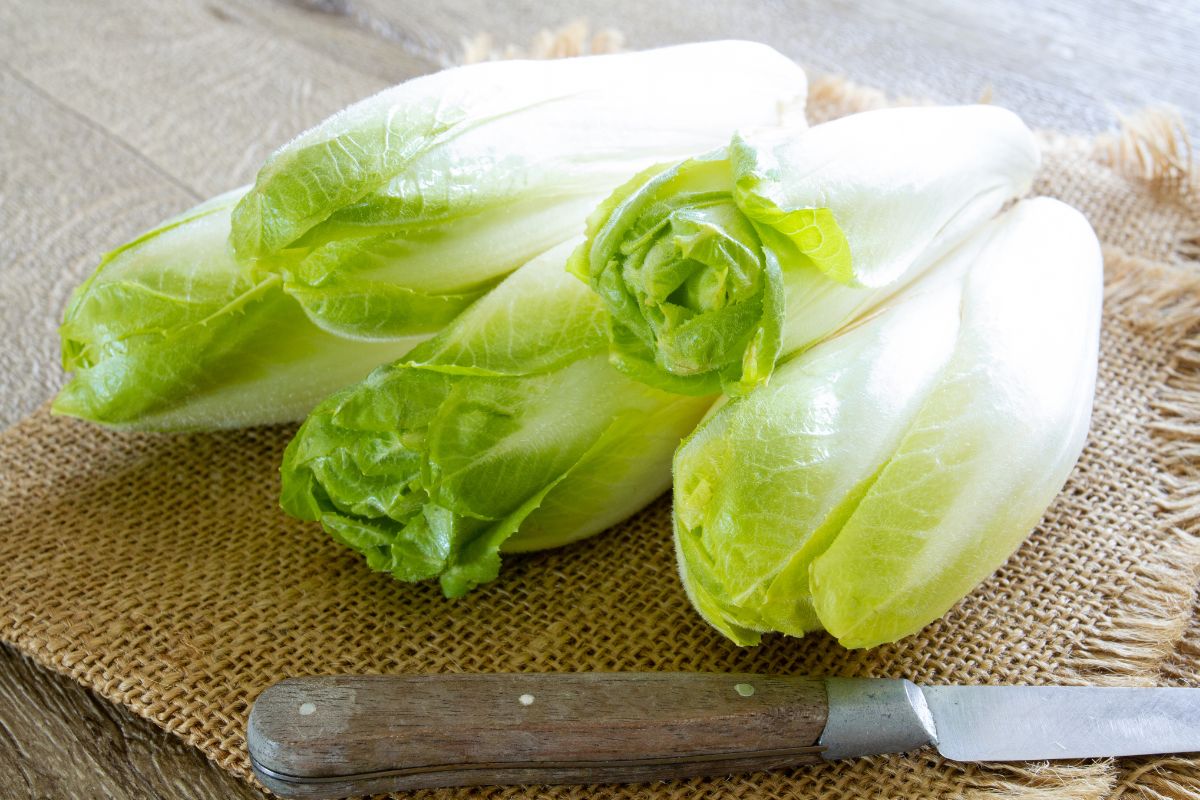
There are two main types of endive: curly endive and Belgian endive. Curly endive, also known as frisée, has frilly green leaves that form a loose head. Belgian endive, also known as witloof or French endive, has tightly packed white or pale yellow leaves that form a cylindrical shape. Both types of endive are grown in a two-step process: first, the chicory roots are harvested and stored in a dark place; then, the roots are replanted and forced to produce new leaves in the absence of light. This technique prevents the leaves from turning green and bitter, and gives them a mild and delicate flavor.
Endive has been cultivated since ancient times, and was valued by the Greeks and Romans for its medicinal and culinary properties. Endive was introduced to America by European immigrants in the 19th century, and became popular in salads and other dishes. Today, endive is widely consumed around the world, especially in France, Belgium, and the Netherlands, where it is considered a national vegetable.
The Different Varieties of Endive
As mentioned above, there are two main types of endive: curly endive and Belgian endive. However, there are also some variations and hybrids within these categories, such as:
- Red endive: This is a type of Belgian endive that has red or purple leaves instead of white or yellow. It has a slightly sweeter and less bitter flavor than regular Belgian endive, and adds a splash of color to salads and dishes. Red endive is also known as radicchio di Treviso, and is a specialty of the Veneto region in Italy.
- Escarole: This is a type of curly endive that has broader and less curly leaves than frisée. It has a milder and less bitter flavor than frisée, and can be eaten raw or cooked. Escarole is also known as broad-leaved endive, Bavarian endive, or scarola, and is commonly used in Italian and Mediterranean cuisines.
- Radicchio: This is a type of chicory that has red or purple leaves with white veins, forming a round or elongated head. It has a peppery and bitter flavor that mellows when cooked. Radicchio is not technically an endive, but it is often grouped with endive because of its similar appearance and cultivation method. Radicchio is also known as red chicory, Italian chicory, or chioggia, and is widely used in Italian and European cuisines.
How to Choose and Buy Fresh Endive
Signs of Quality and Freshness
When buying endive, look for fresh and crisp leaves that are free of blemishes, wilting, or browning. The leaves should be tightly packed and firm, not loose or limp. The color of the leaves should be bright and uniform, not faded or discolored. The base of the endive should be clean and white, not brown or moldy. The endive should also have a pleasant and fresh smell, not sour or musty.
Picking the Right Endive for Your Dish
Depending on your recipe and preference, you may want to choose a different type of endive. Here are some general guidelines to help you decide:
- If you want a crunchy and bitter endive for salads, soups, or stir-fries, go for curly endive or frisée. They have a distinctive texture and flavor that can add some contrast and interest to your dishes.
- If you want a tender and mild endive for braising, baking, or stuffing, go for Belgian endive or witloof. They have a delicate texture and flavor that can absorb the flavors of other ingredients and sauces.
- If you want a colorful and sweet endive for salads, appetizers, or roasting, go for red endive or radicchio di Treviso. They have a vibrant hue and a slightly sweeter and less bitter flavor than regular Belgian endive.
- If you want a versatile and easy endive for salads, soups, or sautéing, go for escarole or broad-leaved endive. They have a milder and less bitter flavor than curly endive or frisée, and can be eaten raw or cooked.
How to Prepare Endive Before Cooking
How to Wash and Clean Endive
Before cooking with endive, you need to clean and wash it properly to remove any dirt, insects, or pesticides. Here are some steps to follow:
- Cut off the base of the endive and discard any damaged or wilted outer leaves.
- Separate the leaves and rinse them under cold running water, rubbing them gently with your fingers to dislodge any dirt or debris. You can also soak the leaves in a bowl of water with a splash of vinegar for a few minutes to kill any bacteria or insects.
- Drain the leaves and pat them dry with a clean kitchen towel or paper towel. You can also use a salad spinner to remove excess water.
- Trim off any tough or bitter parts of the leaves, such as the stem or the core. You can also cut the leaves into smaller pieces if desired.
How to Make Endive Less Bitter
Endive has a natural bitterness that some people may find unpleasant or overpowering. If you want to reduce the bitterness of endive, you can try some of these methods:
- Blanch the endive in boiling water for a few seconds, then plunge it into ice water to stop the cooking process. This will leach out some of the bitter compounds and make the endive more palatable.
- Sprinkle some salt, sugar, or lemon juice over the endive before cooking. This will balance out the bitterness and enhance the flavor of the endive.
- Pair the endive with sweet, sour, or creamy ingredients, such as fruits, vinegar, cheese, or cream. This will create a contrast and harmony of flavors that will mask the bitterness of the endive.
Culinary Uses of Endive
Endive is a versatile vegetable that can be eaten raw or cooked, and used in various dishes and cuisines. Here are some of the most common and delicious ways to use endive in cooking:
Raw Endive in Salads
One of the simplest and most popular ways to use endive is to add it to salads, either as the main ingredient or as a complement to other greens. Endive adds a crunchy and bitter contrast to sweet, sour, or creamy elements in salads, such as fruits, nuts, cheese, or dressing. Some classic examples of endive salads are:
- Endive and pear salad: This is a simple and elegant salad that combines sliced endive, pear, and blue cheese, tossed with a lemon and honey dressing. You can also add some walnuts or pecans for extra crunch and flavor.
- Endive and orange salad: This is a refreshing and colorful salad that combines endive, orange segments, and black olives, drizzled with a vinaigrette made with orange juice, olive oil, vinegar, and mustard. You can also add some fennel or red onion for extra crunch and flavor.
- Endive and beet salad: This is a hearty and nutritious salad that combines endive, roasted beets, and goat cheese, dressed with a balsamic and honey dressing. You can also add some pistachios or almonds for extra crunch and flavor.
Cooking Endive
Endive can also be cooked in various ways, such as braising, baking, roasting, or grilling. Cooking endive softens its texture and reduces its bitterness, making it more palatable and versatile. Some delicious examples of cooked endive dishes are:
- Braised endive: This is a classic and simple way to cook endive, especially Belgian endive. You just need to cut the endive in half, place it in a skillet with some butter, water, salt, and sugar, and simmer it until tender and caramelized. You can also add some lemon juice, herbs, or cheese for extra flavor.
- Baked endive gratin: This is a rich and indulgent way to cook endive, especially red endive. You just need to blanch the endive, wrap it with some ham or bacon, place it in a baking dish, and cover it with a béchamel sauce and grated cheese. Then, bake it until golden and bubbly.
- Roasted endive: This is a simple and flavorful way to cook endive, especially escarole. You just need to cut the endive into wedges, toss it with some olive oil, salt, pepper, and garlic, and roast it in the oven until crisp and browned. You can also add some lemon zest, rosemary, or parmesan cheese for extra flavor.
How to Use Endive as a Garnish or a Container
Endive can also be used as a garnish or an edible container for other ingredients, such as dips, spreads, or fillings. Endive adds a decorative and crunchy touch to any dish, and can also serve as a low-carb and gluten-free alternative to bread or crackers. Some tasty examples of endive as a garnish or an edible vessel are:
- Endive and salmon rosettes: This is a fancy and elegant appetizer that consists of rolling thin slices of smoked salmon into rosettes and placing them on endive leaves. You can also add some cream cheese, dill, or capers for extra flavor.
- Endive and hummus boats: This is a healthy and easy snack that consists of filling endive leaves with hummus and topping them with some chopped tomatoes, cucumbers, or olives. You can also add some feta cheese, parsley, or lemon juice for extra flavor.
- Endive and crab salad cups: This is a light and refreshing salad that consists of mixing some crab meat, mayonnaise, celery, and green onions, and spooning it into endive leaves. You can also add some lemon zest, mustard, or hot sauce for extra flavor.
How to Pair Endive with Other Ingredients
What Flavors and Textures Go Well with Endive?
Endive has a crisp and bitter taste that can complement a variety of flavors and textures in different dishes. Some of the best ingredients to pair with endive are:
- Sweet ingredients: Endive can balance out the sweetness of fruits, honey, maple syrup, or sugar, creating a contrast and harmony of flavors. Some examples of sweet ingredients that go well with endive are pears, apples, grapes, oranges, cranberries, dates, figs, or candied nuts.
- Sour ingredients: Endive can also enhance the sourness of vinegar, lemon, lime, or other citrus fruits, adding a refreshing and tangy touch to salads and dishes. Some examples of sour ingredients that go well with endive are balsamic vinegar, red wine vinegar, apple cider vinegar, lemon juice, lime juice, or grapefruit juice.
- Creamy ingredients: Endive can also pair well with creamy ingredients, such as cheese, cream, yogurt, or mayonnaise, creating a smooth and rich texture and flavor. Some examples of creamy ingredients that go well with endive are blue cheese, goat cheese, feta cheese, cream cheese, sour cream, yogurt, or mayonnaise.
How to Use Endive in International Cuisines
Endive is a versatile vegetable that can be used in various international cuisines, such as:
- French cuisine: Endive is a staple in French cuisine, especially in salads and gratins. Some of the most famous French dishes that use endive are salade d’endives aux noix (endive and walnut salad), endives au jambon (endive and ham gratin), and tarte aux endives et au fromage (endive and cheese tart).
- Belgian cuisine: Endive is also a national vegetable in Belgium, where it is known as witloof or chicon. Some of the most popular Belgian dishes that use endive are witloofsoep (endive soup), witloofrolletjes (endive rolls), and witloofsalade (endive salad).
- Italian cuisine: Endive is also widely used in Italian cuisine, especially in salads and pasta dishes. Some of the most common Italian dishes that use endive are insalata di indivia e arance (endive and orange salad), pasta con indivia e pancetta (pasta with endive and bacon), and indivia ripiena (stuffed endive).
Tips and Tricks for Cooking with Endive
How to Boost the Flavor of Endive
Endive has a mild and delicate flavor that can be enhanced by using some of these tips and tricks:
- Seasoning: Endive can benefit from some seasoning, such as salt, pepper, garlic, onion, herbs, or spices, to add some flavor and aroma to the vegetable. Some examples of seasonings that go well with endive are salt, pepper, garlic, onion, thyme, rosemary, sage, nutmeg, or paprika.
- Toasting: Endive can also be toasted, either in a skillet or in the oven, to bring out its natural sweetness and nuttiness. Toasting endive can also give it a nice golden color and a crispy texture. To toast endive, you just need to cut it into thin slices, toss it with some oil, salt, and pepper, and cook it over medium-high heat or bake it in a preheated oven until browned and crisp.
- Caramelizing: Endive can also be caramelized, either in a skillet or in the oven, to create a rich and complex flavor and a soft and tender texture. Caramelizing endive can also give it a deep brown color and a sticky coating. To caramelize endive, you just need to cut it in half, sprinkle it with some sugar, salt, and pepper, and cook it over low-medium heat or bake it in a preheated oven until caramelized and soft.
How to Cook Endive Properly for Best Results
Endive is a delicate vegetable that can be easily overcooked or undercooked, resulting in a mushy or tough texture and a bland or bitter flavor. To cook endive properly, you need to follow some of these guidelines:
- Cooking time: Endive does not need a long cooking time, as it can lose its crispness and flavor if cooked for too long. The ideal cooking time for endive depends on the cooking method and the size of the endive pieces, but generally, it ranges from 5 to 15 minutes. You can check the doneness of endive by piercing it with a fork or a knife, and it should be tender but not mushy.
- Cooking temperature: Endive also does not need a high cooking temperature, as it can burn or dry out if cooked at too high a heat. The ideal cooking temperature for endive depends on the cooking method and the desired result, but generally, it ranges from low to medium-high. You can adjust the heat as needed, and avoid scorching or smoking the endive.
- Cooking liquid: Endive also needs some cooking liquid, such as water, broth, wine, or juice, to prevent it from sticking or drying out. The amount of cooking liquid for endive depends on the cooking method and the size of the endive pieces, but generally, it ranges from 1/4 to 1/2 cup. You can also add some butter, oil, or cream to the cooking liquid to add some richness and flavor to the endive.
How to Store Endive
How to Keep Endive Fresh in the Refrigerator
Endive is a perishable vegetable that can wilt or spoil if not stored properly. To keep endive fresh in the refrigerator, you need to follow some of these steps:
- Wrapping: Endive should be wrapped in a damp paper towel or a plastic bag to prevent it from drying out or losing its crispness. You can also wrap each endive individually to prevent them from bruising or crushing each other.
- Location: Endive should be stored in the vegetable drawer or the crisper section of the refrigerator, where the temperature and humidity are optimal for preserving its freshness and quality. You should also avoid storing endive near ethylene-producing fruits, such as apples, bananas, or tomatoes, as they can speed up the ripening and spoilage of endive.
- Duration: Endive can last for up to a week in the refrigerator, if stored properly. However, it is best to use endive as soon as possible, as it can lose its flavor and nutrition over time. You can also check the freshness of endive by looking at its appearance, smell, and texture, and discard any endive that is wilted, browned, moldy, or slimy.
How to Freeze Endive
Endive can also be frozen, but it will lose some of its texture and flavor in the process. Freezing endive is not recommended for raw consumption, but it can be used for cooking purposes. To freeze endive, you need to follow some of these steps:
- Blanching: Endive should be blanched before freezing, to deactivate the enzymes that can cause browning and spoilage. To blanch endive, you just need to boil it in water for a few minutes, then plunge it into ice water to stop the cooking process. You can also add some lemon juice or vinegar to the water to prevent discoloration.
- Draining: Endive should be drained well after blanching, to remove excess water that can cause freezer burn or ice crystals. You can also pat the endive dry with a clean kitchen towel or paper towel, or use a salad spinner to remove excess water.
- Packing: Endive should be packed in airtight containers or freezer bags, leaving some space for expansion. You can also label and date the containers or bags, to keep track of the freezing time and quality of the endive.
- Freezing: Endive should be frozen as quickly as possible, to preserve its freshness and quality. You should also store endive in the coldest part of the freezer, away from the door or vents, where the temperature is more stable and consistent.
- Thawing: Endive should be thawed before cooking, to prevent it from becoming soggy or mushy. To thaw endive, you can either transfer it to the refrigerator and let it thaw overnight, or place it in a colander and run cold water over it until thawed. You should also drain the endive well after thawing, to remove excess water.
Endive in Season
Availability by Region
Endive is a cool-season vegetable that grows best in mild and moist climates. Endive can be found in different regions of the world, depending on the type and the season. Here are some general guidelines to help you find endive by region:
- North America: Endive is available in North America from fall to spring, with peak season from November to March. Endive is mainly grown in California, where the climate is ideal for its cultivation. You can find endive in most supermarkets, farmers’ markets, or specialty stores in North America.
- Europe: Endive is available in Europe year-round, with peak season from October to April. Endive is widely grown and consumed in Europe, especially in France, Belgium, and the Netherlands, where it is considered a national vegetable. You can find endive in most grocery stores, markets, or delicatessens in Europe.
- Asia: Endive is available in Asia from winter to spring, with peak season from December to February. Endive is not very common in Asia, but it can be found in some countries, such as Japan, China, or Korea, where it is used in salads, soups, or stir-fries. You can find endive in some supermarkets, import stores, or online shops in Asia.
- Australia and New Zealand: Endive is available in Australia and New Zealand from late winter to early summer, with peak season from August to November. Endive is not very popular in Australia and New Zealand, but it can be found in some specialty stores, farmers’ markets, or online shops. You can also grow your own endive in your garden or balcony, as it is easy to cultivate and harvest.
Seasonal Menu Ideas
Endive is a versatile vegetable that can be used in various dishes and cuisines, depending on the season and the availability. Here are some seasonal menu ideas to inspire you to use endive in cooking:
- Fall: Endive is abundant and fresh in fall, and can be used to create warm and cozy dishes, such as soups, stews, or casseroles. You can also use endive to add some crunch and bitterness to salads, sandwiches, or wraps, or to make some appetizers, such as endive and cheese bites, endive and apple slaw, or endive and cranberry relish.
- Winter: Endive is still available and crisp in winter, and can be used to create hearty and comforting dishes, such as roasts, braises, or gratins. You can also use endive to add some color and freshness to salads, dips, or spreads, or to make some snacks, such as endive and hummus boats.
- Spring: Endive is at its peak and sweetest in spring, and can be used to create light and refreshing dishes, such as salads, pastas, or quiches. You can also use endive to add some texture and flavor to soups, stir-fries, or curries, or to make some desserts, such as endive and strawberry salad.
- Summer: Endive is scarce and expensive in summer, but it can still be used to create cool and refreshing dishes, such as salads, gazpachos, or smoothies. You can also use endive to add some crunch and bitterness to sandwiches, burgers, or pizzas.
Conclusion
Cooking with endive can open up a world of culinary possibilities. You can enrich your dishes with this versatile and complex leafy vegetable by knowing the different types of endive and how to select and prepare them. Endive can enhance any meal, whether you use it raw in salads for a fresh and crisp taste or cook it to bring out its unique and rich taste. You can also experiment with different combinations and methods to create dishes that are both tasty and beautiful. Endive is a great ingredient to explore and unleash your culinary creativity.
[ad_2]
Source link

