
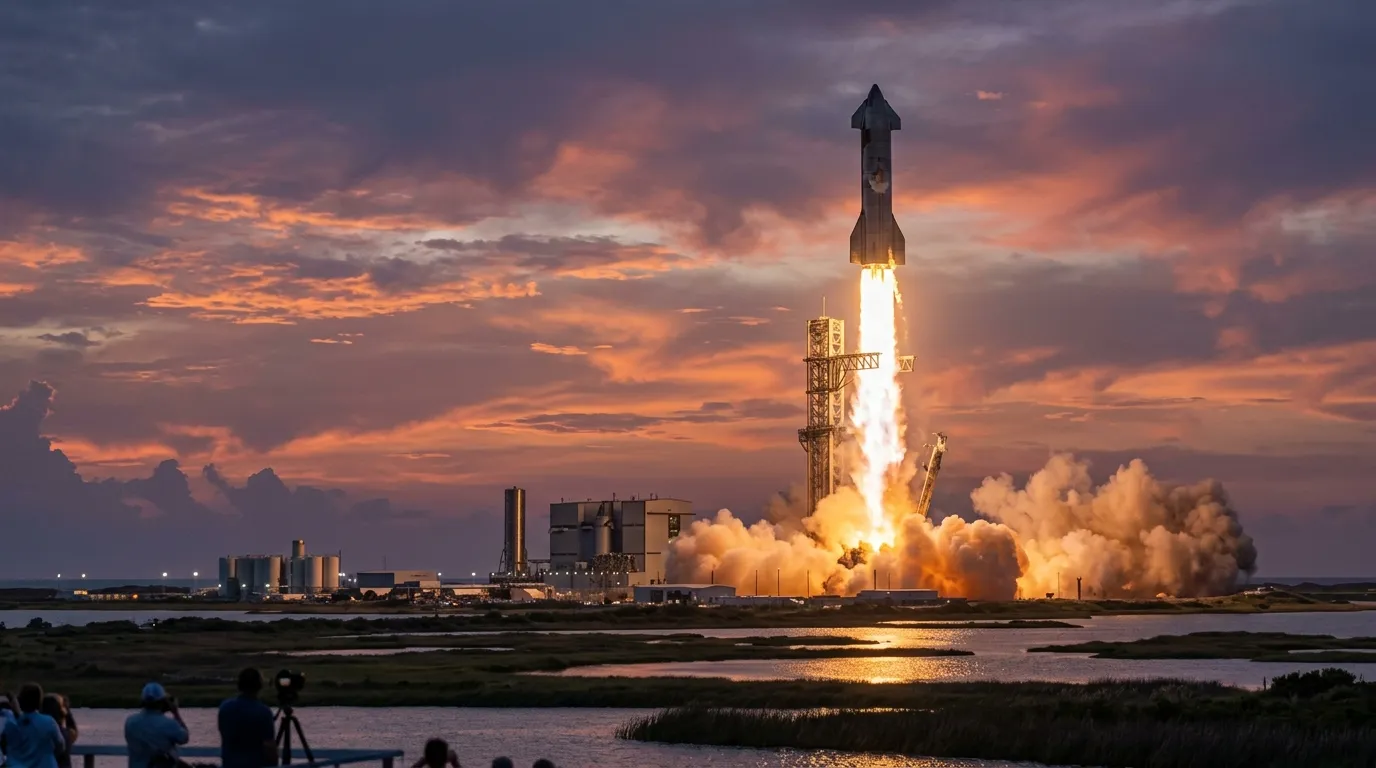
SpaceX Starship: Launch Results: Every Test Flight So Far
Table of Contents
SpaceX Starship: Launch Results: Every Test Flight So Far
The development of SpaceX Starship marks one of the most ambitious engineering endeavors in the history of aerospace. As the fully reusable transportation system designed to carry both crew and cargo to Earth orbit, the Moon, Mars, and beyond, its test flight progression is closely watched by industry experts and enthusiasts alike. Understanding the SpaceX Starship launch results provides critical insight into the future of space exploration and the feasibility of multi-planetary life. This vehicle represents a paradigm shift from traditional expendable rockets to a rapid iteration model similar to software development, where failures are treated as data points rather than setbacks. This approach allows SpaceX to innovate at a pace previously unseen in the aerospace industry, challenging conventional regulatory and engineering norms.
Each integrated flight test (IFT) builds upon the data collected from the previous mission. From engine performance to thermal protection systems, every second of flight generates terabytes of data. This comprehensive overview details every test flight so far, analyzing the successes, failures, and technological leaps achieved during each phase of development. By examining the SpaceX Starship launch results, observers can track the rapid pace of innovation driven by Elon Musk’s company and understand how close humanity is to becoming a multi-planetary species. The following breakdown covers the technical milestones achieved from Starbase in Boca Chica, Texas, highlighting the evolution of the world’s most powerful rocket and its implications for global connectivity and deep space exploration.
Starship stands as the tallest and most powerful launch vehicle ever constructed, towering over 120 meters. Its stainless-steel construction offers durability and heat resistance, while its Raptor engines utilize liquid oxygen and methane for efficient combustion. The system generates approximately 17 million pounds of thrust at liftoff, surpassing the Saturn V rocket that took astronauts to the Moon. The following sections break down the specific outcomes of each major test flight, providing a clear timeline of progress.
What Happened During the First Integrated Flight Test?
The inaugural integrated flight test of Starship took place on April 20, 2023, launching from the Starbase facility in Boca Chica, Texas. This mission, designated IFT-1, was primarily focused on clearing the launch tower and gathering data on the vehicle’s behavior during max aerodynamic pressure. The sheer scale of the rocket, standing 121 meters tall, presented unique challenges for ground infrastructure and flight control systems. The primary goal was simply to survive the ascent long enough to validate the flight termination system and clear the launch pad safely. Success was defined by learning, not necessarily by reaching orbit.
During the ascent, the Super Heavy booster ignited all 33 Raptor engines. While the lift-off was successful, several engines failed shortly after launch due to fuel filter issues and structural vibrations. At approximately T+3 minutes, the vehicle began to lose altitude and control due to an unexpected roll. The flight termination system (FTS) was activated to destroy the vehicle safely over the ocean when it failed to separate stages as planned. The flight lasted approximately four minutes before termination, reaching an altitude of 39 kilometers. This data was crucial for understanding the limits of the thrust structure.
- Launch Date: April 20, 2023
- Peak Altitude: 39 kilometers
- Outcome: Flight termination activated during ascent
- Key Lesson: Need for water deluge system and engine filter improvements
Despite the explosion, SpaceX deemed the test a success in terms of data acquisition. The launch provided invaluable information regarding ground support equipment, engine ignition sequences, and the structural limits of the stainless steel chassis. The concrete launch pad suffered significant damage, leading to the installation of a water-cooled steel deflector system for future launches to mitigate acoustic energy and heat reflection. This infrastructure upgrade was critical for protecting the site during subsequent high-thrust liftoffs and preventing debris scattering, directly influencing future SpaceX Starship launch results by ensuring the ground system could withstand the power of 33 Raptor engines.
How Did the Second Test Flight Improve on the First?
Following the lessons learned from IFT-1, SpaceX prepared for the second integrated flight test on November 18, 2023. The primary objective was to achieve hot staging, a maneuver where the upper stage engines ignite before the booster engines completely shut down. This technique increases payload capacity and improves separation reliability by maintaining thrust during the critical separation event. Engineers also implemented a water deluge system to protect the launch mount from acoustic damage, addressing the infrastructure issues seen in the first test. These upgrades were essential for maintaining the integrity of the launch site.
IFT-2 saw significant improvements. All 33 booster engines functioned correctly at liftoff, providing stable ascent. The hot staging sequence was executed successfully, a major milestone that validated the new separation ring design. The Super Heavy booster completed its ascent burn and began its descent toward the Gulf of Mexico. Although contact was lost with the booster during the return burn, telemetry indicated it reached the intended splashdown zone. The booster also successfully performed a flip maneuver to orient itself for landing, demonstrating control authority and validating the aerodynamic surfaces.
- Launch Date: November 18, 2023
- Key Milestone: Successful hot staging separation
- Booster Outcome: Reached splashdown zone, contact lost during return burn
- Ship Outcome: Reached space, engines ignited, terminated during coast phase
The Starship upper stage also performed better than its predecessor. It reached space and ignited its six vacuum Raptor engines. However, contact was lost during the coast phase before orbital insertion due to automated flight safety protocols. The flight termination system was again triggered remotely. Nevertheless, the successful hot staging and improved engine reliability demonstrated rapid iteration and problem-solving capabilities within the SpaceX engineering team. The flight duration extended significantly compared to the first test, proving enhanced system stability and aerodynamic control, setting a new benchmark for SpaceX Starship launch results.
What Were the Key Achievements of the Third Test Flight?
Launched on March 14, 2024, the third integrated flight test (IFT-3) aimed to reach orbital velocity and demonstrate complex in-space maneuvers. This mission marked a substantial leap in capability, with the vehicle achieving near-orbital speed before reentry. A critical objective was testing the payload bay door mechanisms, which are essential for deploying satellites like Starlink V2. The ship successfully opened and closed the payload door in the vacuum of space, confirming the mechanical reliability of the deployment system.
Furthermore, IFT-3 focused on propellant transfer technology, a cornerstone requirement for lunar landing missions. While a full transfer was not attempted, the flight validated the plumbing and pressure systems needed to move cryogenic fuel between tanks in microgravity. During reentry, the vehicle maintained communication through the plasma sheath for longer than previous flights, transmitting valuable thermal data before contact was lost at approximately 65 kilometers altitude. The ship survived peak heating conditions better than anticipated, though it eventually broke up during the final descent phase.
- Launch Date: March 14, 2024
- Peak Velocity: Near orbital velocity (25,000 km/h)
- Key Milestone: Payload door operation and propellant transfer demo
- Reentry: Survived peak heating, lost contact during final descent
The data recovered from IFT-3 allowed engineers to refine the heat shield tile attachment methods. The loss of tiles during previous flights had been a concern, but improvements in the adhesive and underlying structure showed promise. This test confirmed that Starship could withstand the intense friction of atmospheric reentry, a prerequisite for any vehicle intended to return safely to Earth. The success of these systems paved the way for the subsequent flight, which aimed for controlled splash

Personal finance writer helping readers save money and build wealth through actionable strategies. Covers budgeting, investing, frugal living, and financial independence topics.
Get the newsgalaxy digest
Honest reviews and no-hype guides — straight to your inbox. No spam, unsubscribe anytime.
Some links in our articles are affiliate links. See our full Affiliate Disclosure for details.